
Welcome to a comprehensive guide that explores how you can tailor physical routines to your unique biology. While everyone can perform any exercise, understanding your individual body helps you train smarter plus achieve results faster.
Recent research from the Smidt Heart Institute at Cedars-Sinai shows fascinating shifts in exercise science. In 2024, data revealed that women often exercise less frequently than men while seeing greater cardiovascular gains. This dynamic way of looking at health empowers you to focus on efficiency rather than just effort.
Our intent is not to limit your choices or put you in a box based on biology. We want to help you reach your goals by using science to your advantage. Understanding biological differences adds a powerful tool to your training routine.
This guide offers insights on how women plus men can optimize their fitness during long-term success. You will discover how hormones plus muscle composition impact your journey. Let’s explore how to build a fitness plan that truly works.
Key Takeaways
- Biological characteristics help you train smarter and reach results faster.
- Recent studies show females gain heart health benefits with less frequent exercise.
- Knowledge of your unique physiology empowers you to use natural strengths.
- Variety remains a secret ingredient for any successful exercise routine.
- Understanding hormones plus muscle composition improves recovery and energy.
- Science-backed insights help you break through plateaus more effectively.
Understanding the Biological Differences Between Male and Female Bodies
Achieving your fitness goals starts with recognizing that male and female bodies function differently at a cellular level. While we may look similar on the surface, the real game-changers for health happen deep inside.
These biological differences affect how quickly you build muscle and how you sustain physical activity. Understanding these traits is not about limitation but about optimizing your unique potential.
Muscle Fiber Composition: Fast-Twitch vs. Slow-Twitch
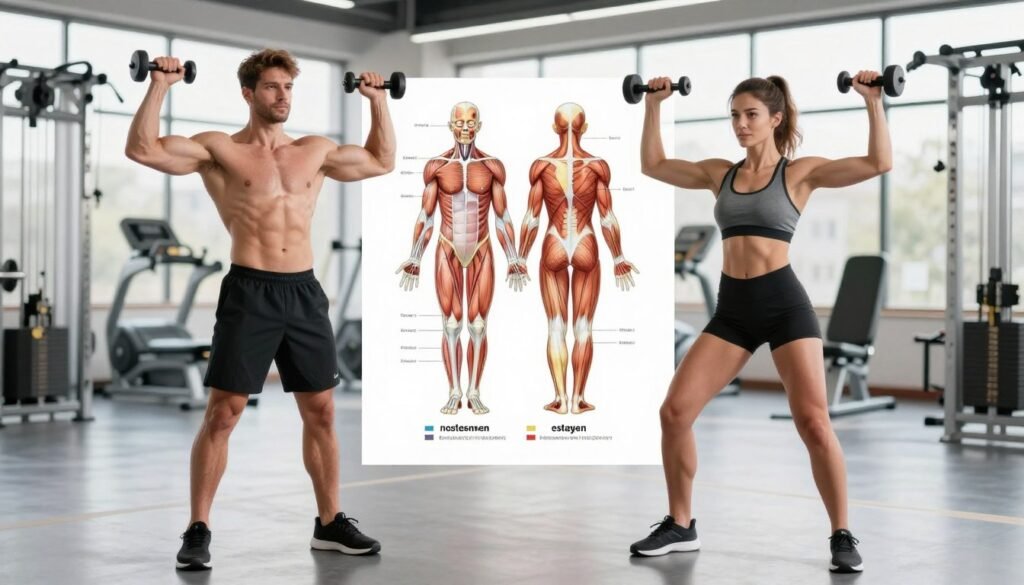
The specific composition of muscle fibers in your body determines your athletic strengths. Women tend to have a higher proportion of type 1 or slow-twitch fibers, which focus on endurance.
This explains why many women excel at long-distance running or holding steady planks for extended periods. Conversely, men typically have a higher ratio of fast-twitch fibers that favor explosive movements.
| Fiber Category | Primary Benefit | Typical Exercises |
|---|---|---|
| Slow-Twitch | Endurance and Stamina | Cycling, Distance Running |
| Fast-Twitch | Power and Speed | Sprinting, Heavy Lifting |
When men gain strength, their bodies often develop more fast-twitch muscle fibers than slow ones. However, women tend to develop both types almost equally, providing a unique balance of power and stamina.
How Hormones Shape Your Fitness Potential
Hormones play a massive role in how we respond to training and recover from workouts. Men naturally possess higher testosterone levels, which directly promotes greater muscle mass and faster growth.
In contrast, women have more estrogen and progesterone, which influence metabolism and how the body stores fat. These hormones also impact how you use energy during a session and your overall injury risk.
Recent studies show that testosterone helps men grow muscle faster, but female hormones may aid in quicker recovery. By knowing these natural tendencies, you can design a program that truly works for you.
How Bone Density and Body Composition Affect Your Fitness Journey
Beyond muscle and stamina, the internal structure of your frame plays a vital role in fitness. Every body reacts differently to physical stress based on its unique build and biological makeup. Understanding these factors helps you set realistic goals and choose the right exercises for your needs.
One challenging fact is that muscle mass naturally declines as we get older. Starting at age 30, it is common for people to lose 3-8% of their muscle every ten years. This change often slows down the metabolism and impacts your overall strength levels.

Since female frames often start with less muscle than their male counterparts, this loss can feel more dramatic. It affects how you move, your daily energy, and your metabolic health. Knowing this allows you to adjust your routine to preserve your vitality.
Focusing on these physical differences is not about limitations. Instead, it is about working with your biology rather than against it. By tailoring your approach, you can achieve better results and avoid unnecessary injuries.
Body composition also plays a huge role in how you look and feel. It is the ratio of fat to lean tissue in your system. While many people focus only on the scale, your composition provides a much better picture of your fitness.
Why Bone Health Matters More for Women
Maintaining a strong skeleton is a primary concern for women throughout their lives. On average, women have lower bone density than men, which significantly increases the risk of fractures. In fact, they are four times more likely to develop osteoporosis as they get older.
Strength training is a powerful tool for improving bone health. By lifting a moderate weight, you put healthy stress on your frame. This encourages the body to increase mineral density over time. Starting early is a great investment in your future independence and mobility. Consistent weight-bearing exercise helps keep your bone structure resilient.
Understanding Fat Distribution and Energy Usage
Hormones and evolution influence where we store fat and how we burn it. Women usually have higher fat percentages to support reproductive health. They tend to store subcutaneous fat under the skin, while men often carry more visceral fat around their organs.
Your energy level during a workout also depends on these differences. Women typically burn fat more efficiently during aerobic exercise. In contrast, male bodies often rely on a higher ratio of carbohydrates for fuel. Recognizing these patterns allows you to tailor your nutrition for better performance and sustainable weight management.
| Feature | Women | Men |
|---|---|---|
| Bone Density | Lower average; higher risk of osteoporosis | Higher average; lower fracture risk |
| Fat Storage | Subcutaneous (located under the skin) | Visceral (around internal organs) |
| Primary Energy Source | Prefers burning fat during exercise | Relies more on carbohydrates and protein |
| Muscle Loss Rate | 3-8% per decade after 30; more impactful | 3-8% per decade after 30; higher baseline |
Strength Training: Different Approaches for Men and Women
It is no secret that men often pack on muscle mass faster than women, though both genders benefit immensely from lifting. However, this biological head start does not mean women cannot develop building incredible strength. Both groups must focus on proper form instead of ego-lifting to stay safe in the gym.
Training smart means recognizing your unique starting point. Every movement you perform should focus on quality rather than just moving heavy weights. Success in the weight room is about consistency and technique rather than just brute force.
Why Men Build Muscle Mass More Easily
Biology gives men a natural advantage in workouts that require brute strength. This is primarily due to significantly higher levels of testosterone, which signals the body to repair and grow muscle tissue rapidly. They also possess a greater proportion of fast-twitch muscle fibers that respond quickly to resistance training.
Because of their larger frames, exercises like deadlifts and squats often feel more intuitive for them. This allows them to see visible results in a shorter period. Even with these perks, men must still work strategically to reach their physical goals.
Effective Strength Training Strategies for Women
Many women avoid the weight room because they fear getting “bulky,” but this is a common myth. Strength training supports female hormone health and boosts metabolism during the menopausal transition. Understanding that building strength is a marathon, not a sprint, helps you stay consistent.
The benefits of strength training extend far beyond aesthetics to include improved bone density and mental resilience. Your strength often peaks around ovulation when your natural hormones are at their highest. This is the perfect time to hit a new personal record or try high-intensity training.
Effective strength training also builds the functional power needed for daily life. Most ladies will not develop massive muscle mass without very specific, extreme protocols. Instead, they will see a toned, powerful physique that supports long-term health.
| Feature | Men’s Context | Women’s Context |
|---|---|---|
| Hormonal Driver | High Testosterone | Estrogen and Growth Hormone |
| Muscle Fiber Type | Mostly Fast-Twitch (Power) | Higher Slow-Twitch Ratio |
| Primary Goal | Hypertrophy and Power | Metabolic and Bone Health |
| Optimal Timing | Consistent Daily Output | Peak Performance at Ovulation |
Cardio and Endurance: Playing to Your Natural Strengths
When it comes to hitting the pavement or the bike, understanding your body’s natural inclinations can transform your cardiovascular results. Biology significantly influences how you process oxygen and sustain effort during long or intense sessions.
Women’s Endurance Advantage and What It Means
Research shows that women often have a natural edge in long-distance activities. This is because their muscles contain a higher percentage of slow-twitch fibers. These specialized cells allow for better stamina and help women recover faster between intense workouts. While long runs might feel sustainable, the most effective training strategy involves stepping outside that comfort zone.
Recent data suggests that women benefit most from incorporating explosive, high-intensity movements. Since endurance is already a biological strength, adding sprint intervals challenges the body in a new way. This type of exercise targets less-developed muscle groups for a more balanced and powerful physique.
Why Men Benefit More from Steady-State Cardio
In contrast, men typically excel at short, powerful bursts of effort rather than sustained activity. To see the best health results, men should prioritize steady-state exercise. Physiologically, a male heart and lungs are often larger, which helps move oxygen efficiently during cardio. However, skipping long, steady sessions can limit their overall endurance potential.
| Metric | Women | Men |
|---|---|---|
| Muscle Fiber Dominance | Slow-Twitch | Fast-Twitch |
| Recommended Focus | High-Intensity Intervals | Steady-State Aerobics |
| Natural Advantage | Stamina and Recovery | Power and Speed |
Building a healthy heart requires consistent effort that challenges your natural baseline. For many guys, longer cardio sessions improve fat-burning and build the endurance needed for longer training sessions. By mixing various workouts, you ensure that your cardiovascular system stays strong and resilient for years to come.
Recovery Time and Injury Prevention for Both Genders
While hitting the gym is vital, understanding how your body heals is the true secret to long-term athletic success. Proper rest protects your long-term health and allows your muscles to grow stronger after every session.
How Recovery Needs Differ Between Men and Women
Research suggests that men often need more recovery time between sets and workouts than women do. Even though male athletes might produce a higher output of power, their systems take longer to return to a baseline state.
Recent studies highlight these biological differences clearly. Women exhibit lower markers of inflammation after a strenuous exercise, which allows them to rebound more quickly. This efficient inflammatory response means they can often handle a higher training frequency throughout the week.
Common Injuries and Prevention Strategies by Gender
When looking at men women athletes, distinct patterns emerge regarding physical setbacks. Men are more likely to suffer from hernias, shoulder tears, and strains in the muscles due to high-intensity lifting styles.
In contrast, women frequently face issues like Runner’s Knee, stress fractures, and ankle sprains. A common challenge is a specific movement called valgus knee, where the knees collapse inward during a heavy exercise like a squat.
To stay safe, everyone should focus on their specific biomechanical needs. Females should prioritize strengthening the glutes to stabilize knee movement, while males benefit from focusing on flexibility and dynamic warm-ups to protect the joints.
“The best workout is only as effective as the recovery that follows it, making rest a mandatory part of any elite program.”
| Focus Area | Common Injury Risks | Prevention Strategy | Recovery Goal |
|---|---|---|---|
| Men | Hernias, shoulder tears, strains | Prioritize flexibility work | Longer rest between sets |
| Women | Runner’s Knee, stress fractures | Strengthen the glutes | Faster session turnaround |
| Both | Overuse and joint fatigue | Active recovery and sleep | Consistent men women performance |
Fitness for Men and Women: Building Effective Workout Routines
While physiological differences exist, a well-structured routine often centers on the same core exercises for both men women. Foundational movements target every major muscle group and improve functional health. Building a solid fitness program involves selecting moves that challenge the body effectively.
Essential Full-Body Exercises for Everyone
Compound moves like barbell squats and deadlifts are essential for building total-body strength. These exercises engage multiple joints and help you burn more calories during each workout. You should also include lunges and hip raises to target the lower body specifically.
Pushups and barbell bench presses provide excellent upper-body integration, while planks and mountain climbers build core endurance. Adding plyometric moves like squat jumps, tuck jumps, or burpees helps build power and explosiveness. Bench dips and bicep curls can round out your workouts by targeting specific areas.
Whether you choose a goblet squat or a barbell row, focusing on proper form ensures your exercise sessions remain safe. Every exercise should serve a purpose in your overall plan. Using a variety of functional exercises keeps your training fresh and engaging for the long term.
Customizing Sets, Reps, and Rest Periods
Individualization is the key to seeing real progress over time. Men women often respond differently to training stimulus, meaning your routine needs specific adjustments. Women often thrive with higher rep ranges, such as 12 to 15 reps, using moderate weights and shorter rest periods.
Consistency in your workout routine is the most important factor for long-term success.
In contrast, men might focus on lower reps, perhaps 6 to 10, with heavier loads and longer recovery times. This method prioritizes pure strength development and muscle growth. Your personal fitness program should reflect these physiological nuances to maximize results.
Always start your workouts with a dynamic warm-up for 5 to 10 minutes. This prepares the body for intense activity and prevents injury. Ending each workout with static stretching keeps the tissues flexible and ready for the next exercise session.
| Exercise | Sets | Reps | Primary Muscle Group |
|---|---|---|---|
| Goblet Squats | 3 | 12-15 | Quads and Glutes |
| Push-Ups | 2 | 8-10 | Chest and Triceps |
| Deadlifts | 2 | 8-10 | Posterior Chain |
| Military Press | 3 | 8-10 | Shoulders |
| Planks | 3 Rounds | Max Hold | Core Stability |
Nutrition Strategies for Optimal Performance
Achieving your peak physical potential requires more than just sweat; it demands a strategic approach to what you eat. Nutrition serves as the essential second half of the fitness equation because you simply cannot out-train a poor diet. Establishing the right eating habits will accelerate your results and sustain your energy throughout the day.
Men and women have unique physiological responses to both exercise and food. Because our bodies process macronutrients differently, a one-size-fits-all meal plan rarely provides the best results. Tailoring your intake to your specific biological needs is the smartest way to reach your finish line.
Key Nutrients and Dietary Approaches for Women
Women often face specific challenges with bone density, particularly as they age or enter menopause. To protect your long-term health, your diet should prioritize calcium, Vitamin K, and Vitamin D. Emerging research also shows that women often metabolize fat more efficiently than carbohydrates during exercise.
Increasing your dietary fat and protein while slightly lowering carbohydrate intake may lead to better performance and satiety. Focus on these nutrient-dense food sources to support your body:
- Protein: Unsweetened yogurt, tofu, beans, eggs, and seafood.
- Calcium: Dairy, leafy greens like kale and broccoli, and fortified plant milks.
- Vitamins: Fatty fish like salmon or tuna for Vitamin D, and green vegetables for Vitamin K.
Managing these nutrient levels effectively helps you control your weight while building lean muscle. Choosing whole, minimally processed foods ensures your body receives high-quality fuel for every workout.
Fueling Your Workouts: Nutrition for Men
For men, nutrition strategies usually involve higher carbohydrate levels to fuel high-intensity training and recovery. Men typically process carbohydrates very efficiently, using them alongside protein and fat to build muscle mass. Including healthy carbs from fruits and vegetables is vital for reaching your fitness goals.
Your daily eating habits should center on balance and consistency to maintain a healthy weight. While a woman’s meal might focus on salmon and greens, a man could add sweet potatoes or quinoa to the same plate for extra energy. This approach supports metabolic health and provides the fuel necessary for strength gains.
| Nutrient Focus | Women’s Strategy | Men’s Strategy |
|---|---|---|
| Primary Energy Source | Higher dietary fats | Healthy carbohydrates |
| Key Bone Nutrients | Calcium & Vitamin D | Balanced minerals |
| Protein Sources | Seafood, tofu, beans | Lean meats, eggs, dairy |
Every individual is different, so pay close attention to how your body responds to different macronutrient ratios. Experimenting with your nutrition allows you to find the perfect balance for your unique lifestyle. Remember, consistency with whole foods is always more important than chasing perfect macros every single day.
Setting and Achieving Your Personal Fitness Goals
Your fitness journey should be a personal mission tailored to your own aspirations and current physical state. Avoid comparing your progress to generic standards or others you see at the local gym. Real progress happens when you align your workouts with your specific lifestyle and health needs.
Research in sports medicine shows that a nuanced approach leads to better long-term outcomes. This means looking at your unique body rather than following a one-size-fits-all plan. Whether you are just starting or are an experienced athlete, your goals should reflect what you want for your future health.
Variety is the secret ingredient to any successful fitness routine. No one should feel stuck in a box based on their gender. We are all capable of exploring different ways to move and challenge our bodies regularly.
Staying flexible in your approach helps you adapt as you age and your priorities change. The latest findings in fitness science suggest that mental attitude is just as important as physical effort. Viewing your body as a dynamic system allows you to celebrate what it can do right now.
Taking a holistic view of your health provides numerous benefits that go beyond the scale. By staying informed about how your body works, you can make smarter choices every day. This knowledge empowers you to lead a more active and fulfilling life for years to come.
Variety is the secret ingredient to any successful fitness routine.
Training Smart: Leveraging Your Strengths and Addressing Weaknesses
Training smart requires you to use your natural physiological strengths while working on harder areas. Women often have a natural advantage in endurance, which is a great asset for long workouts. However, they should also include explosive, power-based training to develop fast-twitch muscle fibers.
This combination helps build the strength and bone density needed for lifelong health. On the other hand, men often gain huge benefits by stepping outside their comfort zone. While lifting heavy is rewarding, adding yoga or steady-state cardio improves overall performance.
These activities might feel less intense, but they provide the balance needed for a well-rounded fitness level. Experimenting with different training styles helps create a body that is both strong and flexible. True growth comes from challenging yourself in new and unexpected directions.
Breaking Free from Fitness Myths and Stereotypes
Outdated myths often stop people from reaching their full potential. A well-known fact is that lifting heavy weights will not make women look bulky. Most lack the high testosterone levels required to reach that type of muscle mass easily.
Similarly, some men worry that yoga will decrease their strength. In reality, these practices improve performance and prevent injuries by increasing range of motion. Sports medicine continues to reveal that flexibility is a key component of peak physical power.
To stay safe, men should use dynamic stretches before a session and static stretches afterward. Women can prevent injuries by doing Bulgarian split squats and one-legged glute bridges. These specific ways of moving ensure everyone reaches their goals and stays healthy for the long term.
| Category | Recommended Strategy | Primary Benefit |
|---|---|---|
| Women | Glute bridges and banded clamshells | Improved hip stability and injury prevention |
| Men | Dynamic pre-workout and static post-workout stretches | Better muscle recovery and flexibility |
| Everyone | Regular yoga sessions and variety | Balanced physical and mental health |
Conclusion
True fitness success comes from tailoring your movement and nutrition to your specific bodies. While men women have distinct physiological differences, these traits are tools for optimization rather than limits. Whether it is testosterone levels or muscle fibers, knowing how your body works helps you reach your goals.
Women often excel in endurance and metabolize fat efficiently during exercises. However, they should prioritize strength training and lifting weights to improve bone density. Men often find building muscle easier but benefit from more cardio for a healthy heart.
A great fitness program avoids putting men women in a box based on their type. Use these habits to build a routine that feels right for your age and time. The best workout is the one you enjoy doing every single way regardless of your starting weight.
Everyone deserves to feel empowered during their training. Focus on how your muscles respond to different ways of moving. Discover the benefits of a balanced fitness approach. Finally, stay consistent with your workouts to see the true benefits for men women.
| Category | Optimization for Women | Optimization for Men |
|---|---|---|
| Primary Strength | Build bone health with weights | Maximize muscle growth |
| Cardio Focus | Boost heart health with training | Focus on long-term endurance |
| Muscle Fibers | Slow-twitch fibers management | Explosive type fibers focus |