

Healthy eating is about making small, repeatable choices that boost energy and mood. In daily life, simple swaps and consistent habits beat perfection every time.
This guide explains what sensible nutrition guidance looks like for most people. You will learn how to build balanced meals, read labels, and pick practical swaps that fit busy schedules.
We tie food to overall health and long-term disease prevention. The WHO framework—adequacy, balance, moderation, and diversity—will be our checklist so you can self-check habits easily.
Guidance here applies to many adults, but needs change with age, activity level, and medical conditions. If you have specific concerns, seek support from a registered dietitian to tailor the plan.
Next, we cover eating patterns, calorie and energy balance, carbs and fiber, protein and fats, added sugars, and sodium for blood pressure. Expect clear examples, no heavy jargon, and useful information you can use at the store or on the plate.
Key Takeaways
- Small, repeatable food choices shape energy and mood.
- Follow adequacy, balance, moderation, and diversity as a simple framework.
- Learn practical label-reading and easy meal swaps for real life.
- Food choices matter for day-to-day functioning and long-term health.
- Advice here fits most people, but personalize with a dietitian when needed.
- Upcoming sections will cover carbs, protein, fats, sugars, and sodium.
Build a Healthy Eating Pattern With Real, Nutrient-Dense Foods
Start by building meals around real, minimally processed foods you enjoy. This makes healthy eating easier and more sustainable. Aim for mostly whole ingredients, with room for treats so the pattern lasts.
Focus on minimally processed foods across the day
Make minimally processed choices the default. Pick plain yogurt, canned beans, frozen vegetables, and whole grains as staples.
Fill your plate with protein, vegetables, fruits, whole grains, and healthy fats
Plate-building is simple: protein + colorful vegetables + one fruit + a whole grain + a healthy fat. Examples include rotisserie chicken, bagged salad, microwavable brown rice, and olive oil vinaigrette.
Choose options that fit your preferences and budget
Swap ingredients, not cuisines. Use cultural favorites or vegetarian swaps while keeping nutrient density high.
- Day template: oatmeal + fruit (breakfast), chicken salad + whole-grain roll (lunch), stir-fry with brown rice (dinner), yogurt and nuts (snack).
- Budget tips: frozen fruit, canned lentils, store-brand oats, and bulk grains.
- Weekly plan idea: pick 2 proteins, 2 whole grains, 3–5 vegetables, and 2 fruits to mix-and-match.
Small upgrades help a lot: trade refined grains for whole grains, add a vegetable to pasta sauce, or top plain yogurt with berries. These tiny changes make the overall diet richer and easier to follow for your needs.
Nutrition advice: Balance Calories and Energy to Support Your Body Needs
A simple rule: consume roughly the energy you use each day to support your body needs. Calories are just units of energy your body uses for breathing, moving, and thinking. Match intake to activity and you help maintain healthy weight.

Activity level changes what your daily needs look like. If you are mostly sedentary, choose smaller portions and limit high-calorie drinks and snacks. If you are active, you can add servings or a recovery snack after workouts.
Consistent excess energy is stored as fat. Over time, that storage raises health risk for conditions tied to higher weight.
- Hand-based portion checks: palm = protein, fist = carbs, two fists = vegetables, thumb = fats.
- Snack strategies: pre-portion nuts, pair fruit with a protein source, and avoid eating from big bags.
- Quick self-audit: check beverages, sauces, and frequent extras that add hidden calories without fullness.
Track patterns for one week: note hunger, energy, and small changes in weight to fine-tune portions and timing. These simple checks help you match calories and energy to real body needs and better maintain healthy habits.
Make Carbohydrates Work for You With Whole Grains, Fruit, and Vegetables
Picking the right carbs keeps energy even and hunger in check throughout the day. Aim to get most carbohydrates from whole grains, vegetables, fruit, and pulses so meals fuel you without wide blood-sugar swings.
Prioritize higher-fiber carbohydrates for steady energy
Choose oats, brown rice, whole-wheat pasta, potatoes with skin, beans, and lentils. These whole-grain and pulse sources add fiber that helps fullness, digestion, and steady blood sugar.
Hit daily fruit and vegetable goals with fresh, frozen, or canned options
The WHO target is at least 400 g of fruit and vegetables per day and about 25 g of fiber from natural sources. Use frozen berries, plain canned tomatoes, and fresh fruit to reach that goal without stress.
Use “eat the rainbow” for vitamins, minerals, and variety
Eat the rainbow makes choosing produce easy: pick different colors to boost vitamins and minerals and keep meals interesting. Add spinach to eggs, toss peppers into chili, or mix lentils into soups.
Easy add-ins and an example day
- Oatmeal + berries (breakfast)
- Salad with beans (lunch)
- Apple snack (afternoon)
- Roasted broccoli + brown rice (dinner)
Swap one refined item per day—one small change makes whole grains and produce the new normal over time.
Choose Protein and Healthy Fats That Support Heart Health
Choose protein and healthy fats that protect your heart while keeping meals satisfying.
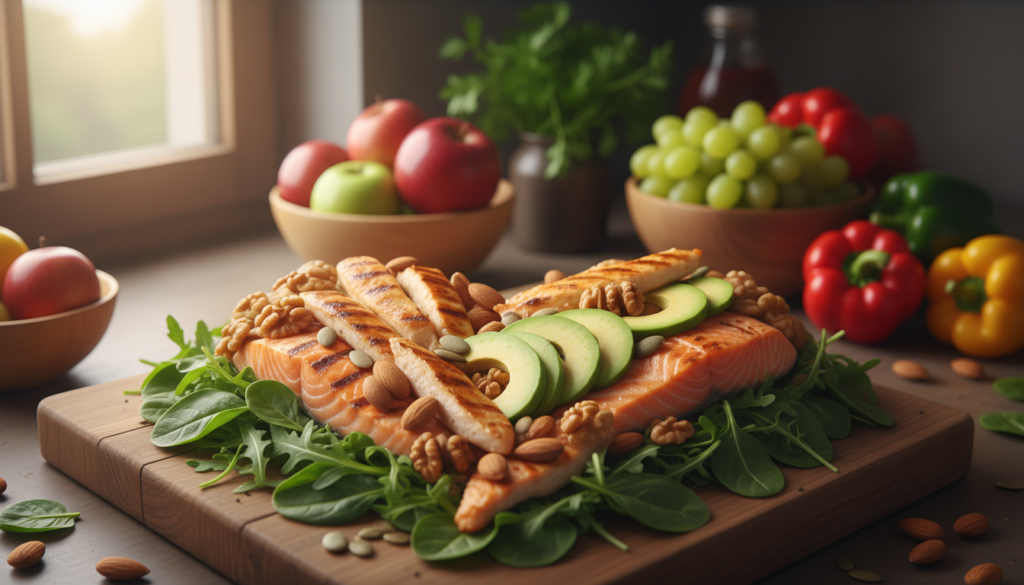
Mix animal and plant sources. Use eggs, poultry, lean meat, dairy in moderation, and plant options like beans, lentils, tofu, nuts, and seeds. This mix helps you meet protein needs and adds varied nutrients.
Include fish for omega-3s
Aim for two fish meals per week and include one oily fish portion (salmon, mackerel, sardines). Omega-3 fats support heart function and lower risk of heart disease.
Swap saturated for unsaturated fats
Choose olive or canola oil, avocado, and nuts instead of butter and hard cheese. Simple swaps reduce saturated fat intake without losing flavor.
- Swap olive oil for butter on toast.
- Use avocado in tacos instead of sour cream.
- Snack on a small handful of nuts instead of pastries.
Watch hidden fats. Saturated fat hides in fatty cuts, sausages, and many processed foods. Industrial trans fats appear in some baked and fried packaged foods; keep them as close to zero as possible.
Quick meals: salmon sheet-pan dinner, bean-and-veg chili, Greek yogurt with fruit, or a turkey-and-avocado sandwich on whole-grain bread.
Cut Back on Added Sugars to Lower Risk for Weight Gain and Heart Disease
Cutting back on added sugars brings real benefits for weight control and long-term heart health. Added sugars are sweeteners put into foods and drinks, not the sugars naturally in whole fruit or milk. Limiting these helps steady energy and curb extra calories that drive weight gain.
Spot common names on labels
Look for cane sugar, corn syrup, dextrose, and fructose. Remember: honey or maple syrup count as added sugars when they are added to a recipe or product.
Rethink your drink
Swap soda, sweet tea, and energy drinks for water or seltzer. Add lemon, lime, cucumber, or a few berries for flavor without loads of sugar.
Smart snack swaps and label tips
- Try fruit with peanut butter, plain yogurt with berries, or apples with cinnamon.
- When shopping, compare “sugars per serving,” check the serving size, and note patterns across cereals, yogurts, and sauces.
- Keep treats occasional and choose smaller portions to lower overall intake of added foods.
Lower-sugar choices help control appetite and support steady blood levels, reducing long-term risk while letting you enjoy food without strict rules.
Reduce Sodium to Protect Blood Pressure and Lower Heart Disease Risk
Many people eat most of their sodium without touching the salt shaker. More than 70% of sodium in the U.S. diet comes from packaged and prepared foods, not the table salt jar. The WHO recommends keeping salt under 5 g/day (about 2 g sodium) to protect blood and reduce disease risk over time.
Where sodium hides in common foods
Breads, canned soups, sauces, deli meats, frozen meals, and restaurant dishes often contain high sodium. Knowing this helps you spot hidden sources and adjust choices when shopping or eating out.
Shop and cook strategies to cut sodium and save time
Label tips: compare similar products, pick “no salt added” tomatoes or beans, and choose lower-sodium broths and condiments. Cook at home more: batch-cook grains, roast a tray of vegetables, and keep seasoned low-sodium proteins ready so weeknight meals come together fast.
Boost flavor without extra salt
Use garlic, chili flakes, smoked paprika, fresh herbs, lemon or lime, and vinegar to add punch. Try tacos with no-salt-added beans and homemade salsa, pasta with no-salt-added tomato sauce plus herbs, or sheet-pan chicken with citrus. Reduce sodium step-by-step so taste buds adapt and small changes stick.
Conclusion
Focus on daily steps that keep your meals nutrient-rich and realistic. Build a diet around minimally processed foods and adjust portions to match your energy and activity needs.
Add one fruit or vegetable to each meal, pick whole grains more often, and include a steady protein source to support steady energy and manage calories naturally. Cut added sugars, lower sodium, and choose unsaturated fats to reduce long-term risk for heart and blood pressure concerns.
Try a 7-day starter plan: pick three breakfasts, three lunches, and three dinners to repeat, then rotate foods for variety. Use one simple swap at a time—water instead of soda, no-salt-added tomatoes, or olive oil instead of butter—to build momentum.
Small choices repeated each day matter most. Personal needs vary, so use this as a practical starting point and adjust to fit your body and life.