

Strength training is any activity that makes your muscles work harder than usual using body weight or resistance. This friendly how-to guide will give you safer form cues, smart programming tips, and simple exercise choices that actually work.
This beginner-focused roadmap fits home or gym settings. Expect clear steps for exercise selection, sets and reps, weekly frequency, and sample workouts. The plan aims for results without making things complicated.
We explain the why — health and performance gains like better bone density, balance, and less joint pain — and the how, from movement patterns to load selection. The article follows public-health advice, such as working major muscle groups at least twice weekly, and evidence-based principles.
Promise: build a full-body foundation, progress gradually, and keep technique first so you can train consistently. Most people can adapt these methods, though professional guidance is wise if you are new or managing a condition.
Key Takeaways
- Learn safe form, simple exercise choices, and smart programming.
- Follow a beginner-friendly roadmap for home or gym workouts.
- Discover why resistance work improves bone, balance, and daily function.
- Get practical guidance on sets, reps, frequency, and progress.
- Train the whole body, advance gradually, and prioritize technique.
What Strength Training Is and Why It Works
Knowing how resistance work changes muscle and function helps you build a simple plan.
Strength vs. resistance: tools, not goals
Strength and resistance training usually mean the same goal: make muscles work harder. The difference lies in the tools — bodyweight, bands, dumbbells, or machines. Pick what fits your space and skill.
What makes an exercise muscle‑strengthening
An exercise counts when it challenges your muscles enough that another rep would be difficult without a short rest. It’s not just moving around; it’s purposeful effort that causes adaptation.
Major muscle groups for full‑body results
- Legs and hips
- Back and core/abdomen
- Chest, shoulders, and arms
Everyday actions like carrying groceries help, but regular sessions matter for steady progress. When you progressively increase resistance or reps, the body adapts with more power, size, and endurance.
Practical approach: start with a few high-value movements that hit multiple groups, then add variety only if needed.
Benefits of Strength Training for Your Body and Health
Consistent resistance work delivers clear, real-world payoffs. Daily tasks like carrying bags, climbing stairs, and lifting kids become easier when your body can produce more force with less effort.
Muscle strength, size, and everyday performance
Build muscle gradually by focusing on steady progress and consistency rather than quick fixes.
Over weeks and months, muscles grow and get stronger, which improves endurance for chores and sports. That means better performance in activities you care about.
Bone density, balance, and lower fall risk
Weight-bearing resistance work helps bones stay denser as we age. Stronger legs and improved coordination lower the chance of a fall.
Complementary activities like tai chi, yoga, or dance can boost balance and coordination for extra safety.
Heart health, blood pressure, and cholesterol support
Regular sessions can help manage blood pressure and improve cholesterol profiles. These changes support long-term heart health and lower cardiovascular risk.
Blood sugar control and type 2 diabetes risk reduction
Better muscle function helps the body use glucose more effectively. That can reduce the risk of type 2 diabetes and help manage blood sugar when combined with medical care.
Mental health, motivation, and social benefits
Exercise often lifts mood and increases motivation. Working with others or a partner also boosts adherence and creates social connection.
Joint support and reduced aches and pains
Stronger muscles take pressure off joints, which can ease aches linked to arthritis or overuse. Always respect pain signals and use modifications when needed.
- Practical payoff: easier daily tasks and better performance.
- Health payoff: improved bones, metabolic markers, and mood.
- Supportive habits: add balance work and social sessions for broader gains.
Who Should Start and When to Get Professional Guidance
Before you start, learn when a simple solo plan is fine and when professional help speeds progress. This guide helps you spot signals that make a consult wise rather than optional.
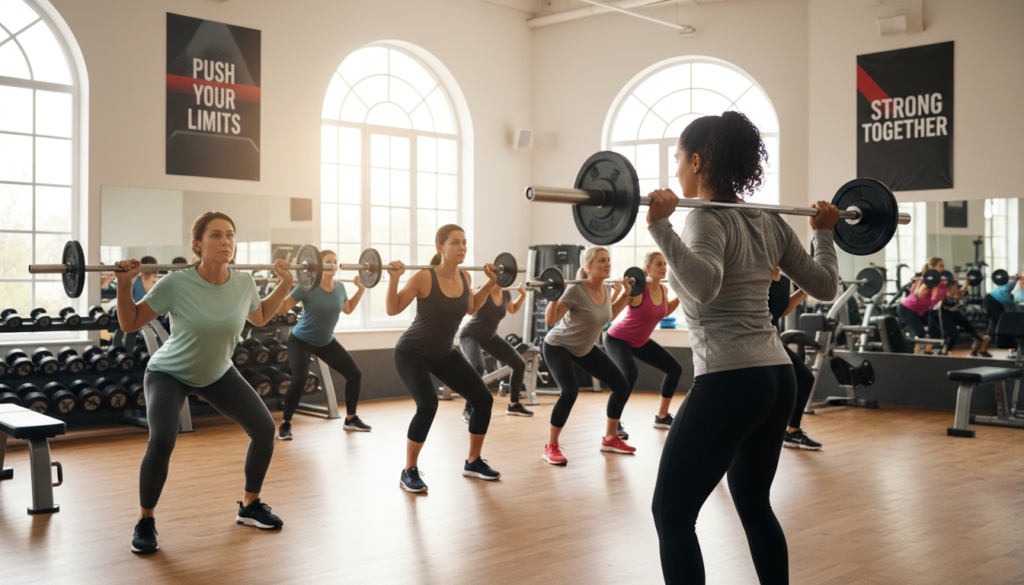
If you’re new: health check and movement screening basics
If you’ve been inactive, have recent symptoms, or past injury, get a basic health check first.
A movement screen is a short assessment by a physiotherapist or qualified coach. It checks joint mobility, balance, and common movement patterns.
Why it helps: a screening can catch issues around the lower back, knee, or shoulder before they cause pain.
Training with chronic conditions or disability
If you have a chronic condition or disability, start only with a plan your clinician approves.
Consider referral to a qualified exercise professional who adapts movements to your needs. Small changes in setup or tempo often make big safety gains.
During pregnancy: smart modifications
When parent and baby are healthy, exercise is usually possible. Prioritize stability, lighter loads, and controlled tempo.
Avoid fall-risk activities and any movement that causes pain. Stop and ask your care team if you’re unsure.
- Quick tips: ask gym staff how to set up machines properly.
- View coaching as a shortcut to better technique and confidence from day one.
- Modifications are normal—choose the safest version you can do well today.
Setting Up for Success at Home or in the Gym
Choose a clear, stable space that makes doing short workouts easy. A good spot saves setup time and helps you show up consistently.
Choosing your space and staying safe
Pick an area with enough floor clearance and solid footing. Move furniture, secure loose rugs, and keep a clear path to rerack weights.
Safety checklist:
- Stable bench or chair.
- Non-slip surface or mat.
- Clear 6–8 feet for movement.
- Stop if anything feels unstable.
Equipment options
Bodyweight work is free, portable, and effective. Dumbbells offer flexibility for many exercises. Bands give joint-friendly tension, and machines guide motion.
Using machines and free weights safely
Machines can lower risk at first because they limit range of motion. Free weights build coordination and control as your form improves.
Begin lighter than you expect. Focus on clean reps and only add load once your form stays consistent.
Quick tip: a focused 20-minute session with key compound moves can be highly productive when you limit distractions and prioritize consistency over perfection.
Strength Training Exercises to Build a Full-Body Foundation
Choose a few core movements that work multiple joints so each session gives the biggest payoff. Compound lifts are multi-joint moves that train several muscles at once, making them the best return on time for most beginners.
Foundational movement menu
Cover these patterns: squat, hinge, push, pull, and overhead press. Together they hit legs, hips, back, chest, and shoulders for a balanced program.
Squat and single-leg options
Goblet squat: feet hip-width, weight close to the chest, sit back into the heels and control the descent. Split squat: stable front foot, vertical torso, drive up through the lead leg.
Hinges and deadlift cues
Push hips back, keep the spine long, brace the core, and slide the weight near your shins. Control the lowering phase and finish by squeezing the glutes.
Pushes, pulls, and overhead work
Bench press or pushup progressions (wall → knees → full) with packed shoulders and steady tempo. Rows pull toward the belly button with a flat back. Overhead press: ribs down, wrists stacked, avoid craning the neck.
Beginner-friendly swaps
If free weights feel unstable, use machine options: leg press, single-leg press, seated row, chest press, hamstring curl, and shoulder press. Start there and progress to free-weight variations as confidence grows.
How to Use Proper Form to Prevent Injury
Protecting your body starts with a consistent warm-up and deliberate movement. A quick routine reduces injury risk and primes the nervous system for work.
Warm-ups and controlled movement basics
Do 3–5 minutes of easy aerobic movement (marching, cycling, or brisk walking). Follow with 2 light practice sets of your first lift to groove the pattern.
Controlled reps mean smooth lowering, steady positions, and no rushing. Speed breaks technique fastest.
Common trouble spots: lower back, knees, and shoulders
- Back: Poor hip hinge or too-heavy load during deadlifts and squats often causes strain.
- Knee: Excessive load or repeated deep lunges can irritate the knee joint.
- Shoulder: Overhead or pressing work with poor blade control can cause impingement.
What to do and how to read signals
Fixes: reduce load, shorten range, tweak stance, brace the core, and control the shoulder blades. If a rep is not clean, stop — the set is too heavy.
Normal soreness (DOMS) peaks later and fades in ~5–7 days. Sharp, stabbing, or worsening pain is a warning. Seek a clinician or qualified coach for persistent pain, numbness, or movement changes.
How Much Weight to Lift, How Many Reps to Do, and How Many Sets to Perform
Start with a weight that keeps your movement clean and leaves you feeling taxed at the end. Pick a load you can control for the whole set while finishing like you could do only 1–3 more reps.
Picking weights that challenge you without sacrificing technique
Practical rule: choose a weight that lets you keep solid form and makes the final reps genuinely hard but controlled. If technique breaks, lower the load.
Reps and sets guidelines: working toward 8–12 reps per set
Aim for about 8–12 reps per set as your default. That range balances muscle and functional gains for most beginners.
Start with 2 sets per exercise and build to 3 sets as you adapt.
Training effort and getting close to “failure” safely
You don’t need to go to complete failure. Being within a few reps of failure is enough to stimulate progress.
Keep the last reps hard but controlled and stop if form degrades or movement speed becomes chaotic.
Rest between sets: finding the productive sweet spot
Rest 30–120 seconds between sets so the next set is productive. Short rests can be fine for lighter loads; longer rests help with heavier work.
- Quality checks: if range of motion shrinks, speed spikes, or position is lost, end the set or lower the weight.
- Progress by adding reps first, then sets, then weight to protect joints and connective tissue.
- Keep the plan repeatable—consistency beats occasional maximal sessions.
How Often to Strength Train Each Week for Results
Most people get solid results by scheduling short, focused sessions across the week. Two sessions per week is a practical baseline that meets public‑health advice and fits busy lives.
Minimum effective dose vs. faster progress
Minimum effective dose: one or two sets per exercise, hitting all major muscle groups once or twice weekly, can show early gains.
Faster progress: increase to three sessions per week or add weekly sets when sleep, nutrition, and stress are managed.
How to cover muscle groups twice per week
Use full‑body sessions that repeat key movement patterns across each week. That way every muscle group gets worked two times without long sessions.
Session length and recovery
Efficient plans can take under 20 minutes. Focus on compound moves and limit rest to stay within a short time frame.
Recovery days are part of progress: muscles rebuild and joints calm between sessions. Alternate harder sessions with easy walking or mobility work to stay consistent.
“Consistency over time beats occasional maximal effort.”
- Track sessions per week and simple progress markers.
- Alternate hard and easy days to protect joints and aid recovery.
- Aim for 2–3 sessions weekly and adjust as you improve.
Sample Weekly Strength Training Programs You Can Follow
Pick a weekly layout that fits your schedule and equipment so you can stay consistent. Below are compact, repeatable program templates that cover squat, hinge, push, pull, and overhead patterns.
Two-day full-body (Day A / Day B)
Day A: Goblet squat 3×8–12, Bent-over row 3×8–12, Pushup or floor press 3×8–12, Deadlift pattern 2×8–10, Plank 2x30s.
Day B: Split squat 3×8–12 each, Overhead press 3×8–12, Single-arm row 3×8–12, Romanian hinge 2×8–10, Side plank 2x20s.
Start each session with 1–2 warm-up sets at lighter weight and stop when form breaks.
Three-day split for more volume
Day 1: Squat + push (2–3 sets each). Day 2: Hinge + pull. Day 3: Full-body mixed circuits. Aim for 2–3 sets per exercise and 8–12 reps.
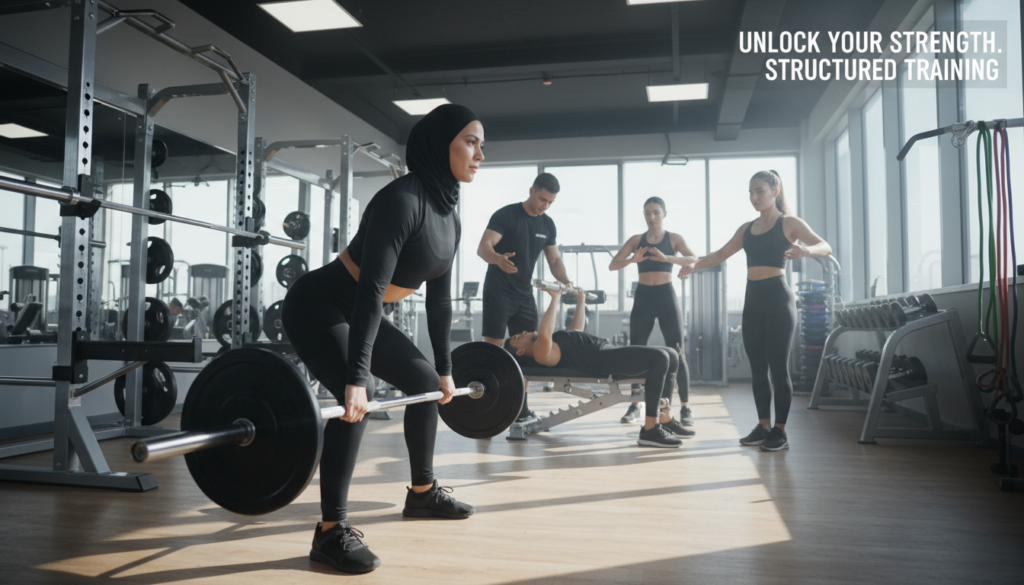
At-home options and progression
Use dumbbells, bands, or household items (cans, water jugs) as substitutes. If no bench, do floor press; for no row bench, do supported row on a chair. Split squat works in small spaces.
Progression: first add reps to the top of the range, then add a set, then increase weight when the movement feels solid. Log reps and weight to track progress.
How Strength Training Fits with Cardio and Flexibility
Balancing muscle work, aerobic activity, and mobility keeps you healthy and helps each part work better.
How much aerobic activity to aim for each week
For general health, aim for at least 150 minutes of moderate aerobic activity per week, or 75 minutes of vigorous activity. Break that into doable chunks: 30 minutes five days a week or three 50-minute sessions.
If time is tight, three 25-minute brisk walks spread across the week still adds up and supports heart and lung fitness.
Why strength work doesn’t count toward aerobic minutes
Time spent on resistance training does not count as aerobic minutes because the physiological effects differ. Cardio raises and sustains heart rate for extended periods.
Muscle sessions build joint resilience and force capacity. Both are important, but they are measured separately for public‑health targets.
Flexibility training options to support posture and reduce injury risk
Include short mobility or flexibility sessions most days. Simple choices work well:
- Static stretching after workouts
- Short yoga or Pilates flows
- Tai chi for balance and joint control
Better joint motion helps you lift with safer positions, especially for shoulders, hips, and ankles. That lowers injury risk and eases everyday movement.
Activities that blend strength and cardio at higher intensity
Some workouts combine both systems. Examples include circuit classes, dance, martial arts, and field sports like soccer or hockey. These can count toward aerobic minutes when intensity stays high.
Practical schedule idea: do muscle sessions 2–3 days per week, cardio 2–4 days, and short mobility work most days. Choose a mix you enjoy and adjust based on energy and results.
“Pick the mix you’ll actually do consistently, then tweak it as you progress.”
- Cardio goal: 150 min moderate or 75 min vigorous per week.
- Muscle work: 2–3 sessions weekly for full‑body resilience.
- Mobility: short daily or post-workout sessions to aid posture.
Conclusion
A clear, repeatable routine is the best way to turn good intentions into real results.
Do muscle work at least two days a week. Focus on compound exercises, aim for about 8–12 reps and 2–3 sets, and pick a weight that challenges you without breaking form.
Warm up, use controlled reps, and protect common trouble spots like the lower back, knees, and shoulders. Rest 30 seconds to 2 minutes between sets so the next set is productive, and schedule recovery days so tissues adapt.
Pick one sample weekly program and follow it for several weeks before changing anything. Strength isn’t just for the gym—it shows up in daily life, posture, and long-term independence. If you have health concerns or pregnancy, seek professional guidance.