

There is no single path that fixes every need. A smart weekly plan mixes activities to build broad health benefits. This guide shows how to match a plan to your current fitness level and lifestyle.
Think of a program as a repeatable routine that fits your goals and schedule, not a rigid rulebook. You will learn to pick workouts that create consistency first, then add intensity to gain strength, endurance, and better body composition.
Whether you are a beginner starting from zero, an intermediate person stuck on a plateau, or someone with limited time, this guide offers practical examples. The key idea is simple: a mix beats one type. Combining cardio, strength, balance, and mobility is the most reliable way to boost overall fitness.
No fancy gear required. Match the plan to your preference—gym vs home, solo vs group—so the routine is realistic and sustainable.
Key Takeaways
- Mix activities across the week for broader benefits.
- Start with consistency, then progress toward strength and endurance.
- Choose workouts that fit your goals, schedule, and preferences.
- The guide suits beginners, intermediates, and busy people.
- Practical examples help you pick a realistic starting point today.
What Makes an Exercise Program Effective Today
Mixing different training styles helps you build resilience and avoid gaps in fitness that single-focus plans often leave.
Think of doing only one activity like eating only fruit—healthy, but missing key nutrients. Cardio boosts heart and lung health, strength work protects bones and adds muscle, and balance or mobility preserves movement quality.
That mix improves your body composition, meaning more lean mass and a better ratio of muscle to fat. That change matters beyond the scale: it raises resting metabolism and supports daily tasks.
- Start with non-negotiables: available time, favorite activities, and realistic weekly frequency.
- Build a simple routine you can repeat week after week—consistency beats occasional heroic work.
- If time is tight, use short blocks and rotate modalities across days to cover cardio, strength, and mobility.
For one clear example, choose 20–30 minute sessions three to five days per week and vary the focus by day. The next sections show goal-specific choices for fat loss, strength, endurance, and general health without confusion.
How to Choose Exercise Programs by Goal and Fitness Level
Pick a clear goal first—losing weight, building muscle, improving endurance, or feeling more energetic—and tailor your week to it. A focused aim makes it easy to choose what to do each day.
Fat loss and weight management: building consistency and weekly activity
Think of weight loss as a consistency game. Set a weekly target for activity and pick enjoyable cardio that you can repeat.
Keep sessions simple and reliable so weight management becomes sustainable rather than a short sprint.
Muscle and strength: prioritizing strength training and recovery
For muscle and strength goals, favor regular strength training and plan recovery. Aim to allow at least 48 hours between hard lifting sessions to recover and grow.
Focus on full-body lifts early, then add targeted work as you progress.
Endurance and performance: structuring cardio intensity and time
Structure cardio by combining moderate and vigorous sessions. Use time and intensity instead of guessing—longer, steady efforts plus shorter, higher-intensity intervals build endurance efficiently.
General health and energy: combining training types across days per week
For overall health, blend strength and cardio across the week. Beginners start with fewer days per week and simpler sessions; intermediates add volume or structure.
Remember: fat loss and muscle gain overlap, so the best approach usually includes both cardio and strength, adjusted to your primary goal. The next section shows how to turn these choices into a balanced weekly framework and progress plan.
Build a Balanced Weekly Training Plan (Minutes, Days Per Week, Intensity)
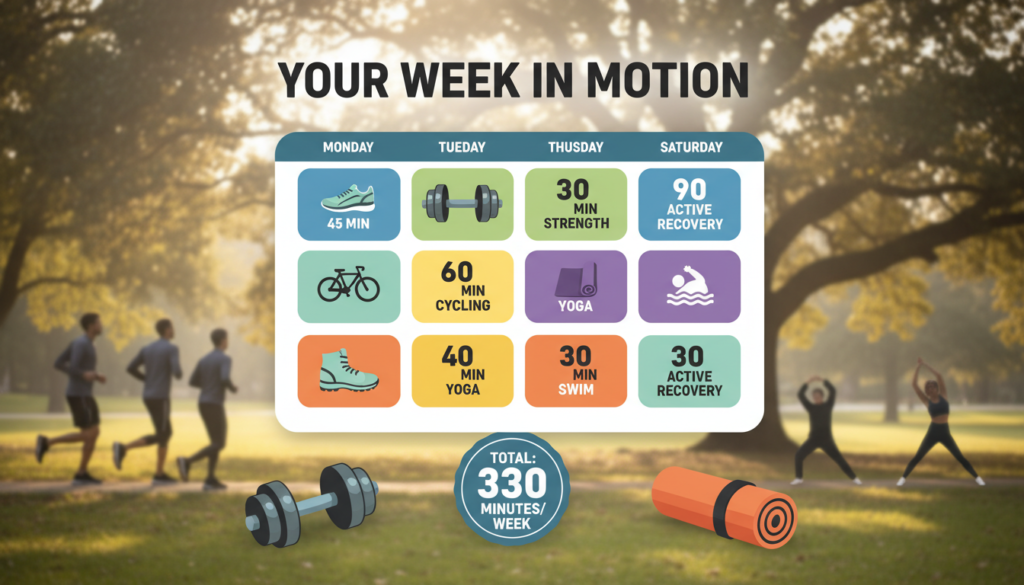
Designing a week around minutes and intensity helps busy adults hit reliable progress.
The baseline target
Aim for 150 minutes of moderate cardio per week or 75 minutes vigorous per week. Moderate feels like brisk walking or a steady bike ride; you can talk but not sing. Vigorous makes talking short and breathy, like a faster run or hard bike effort.
Break workouts into smaller blocks when time is tight
If you lack long blocks of time, split activity into short slots. Three 10-minute walks count toward your minutes and are easier to sustain than one long walk.
Plan strength training with recovery
Schedule at least two strength training sessions each week. Allow 48 hours between training the same muscle groups so muscles recover and grow.
- Pick realistic days you can train and assign minutes and intensity to each day.
- Include a brief warm-up to raise blood flow and a 5–10 minute cool-down plus stretching.
- Sample busy adult plan: 20–30 minutes cardio on three weekdays, strength on two non-consecutive days, optional mobility on the weekend.
Keep the plan adjustable: change minutes or intensity week to week as fitness improves rather than forcing a fixed routine.
Cardio and Endurance Workouts That Work for Most People
Smart aerobic work focuses on minutes, sensible intensity, and gradual progress. This section gives clear steps you can use each week to build endurance without overdoing it.
Moderate vs. vigorous: pick the right intensity
Use the talk test: you can hold a conversation during moderate effort; vigorous effort makes talking short and breathy. Match intensity to fitness and the day’s goals.
Beginner-friendly options
Choose low-impact activity like walking, biking, or swimming to protect joints while building fitness. These workouts build base endurance and are easy to repeat.
How to level up over weeks
First add minutes, then distance, then gentle hills or slightly higher pace. Increase slowly across 2–4 weeks to ensure steady progress.
Walking form checklist
- Stand tall; chin level and chest lifted.
- Shoulders down; toes point forward.
- Arms swing loosely or bent at 90° for speed.
- Heel-to-toe roll; push off with toes; take comfortable strides.
Session length and week pacing
Aim for 20–40 minutes most days. Target moderate sessions 3–5 times per week and include one harder day or interval workout. Pair steady cardio with two strength sessions for best results.
“Consistency over time beats occasional extremes.”
Example: Beginner: 20-minute walks 4x/week. Intermediate: 30–40 minute bike or run 4x/week with one interval day. Small, repeatable wins create lasting progress.
Strength Training Programs for All Major Muscle Groups
A clear, simple strength plan trains every major muscle so the body works better as a whole.
Most people get results lifting two to four days per week, with at least 48 hours between sessions for the same muscles. This spacing prevents burnout and helps muscle recover after tiny tears that drive growth.
Sets, reps, and feeling
Aim for 8–12 reps per set with good form. If the last reps feel challenging but controlled, you are in the right zone. For many, two to three sets per movement hit the sweet spot.
Form, tempo, and breathing
Form matters more than adding weight. Use a tempo like 4 up / 2 hold / 4 down to protect joints and stay in control. Breathe out on the effort and inhale on the release.
Progressive overload and routine choices
Add small weight jumps (1–2 lb for arms, 2–5 lb for legs), increase reps, or use stronger resistance bands to progress. Choose a full-body routine 2–3 times weekly, or a simple split (upper/lower) across four days.
- Major muscle groups to cover: legs, hips, back, chest, abdomen, shoulders, arms.
- Combine gym lifts and home resistance for a balanced routine.
- Track progress with small, steady increases rather than big sudden jumps.
“Progress is built from consistent, measured steps—not one heavy session.”
Balance Training for Stability, Mobility, and Fall Prevention
Good balance keeps you steady in daily life and lowers the chance of a serious fall.
Many people benefit from balance-focused work, especially older adults and anyone who feels unsteady, stiff, or deconditioned. Falls harm independence and overall health, so preventing them matters.
Who benefits most from balance-focused work
Older adults, people with neuropathy or vision issues, and those taking medications that affect steadiness see the biggest gains. Anyone recovering from a sedentary period or who notices wobbliness should pay attention.
Balance-boosting options: tai chi, yoga, Pilates, and core strength work
Choose gentle options you enjoy: tai chi improves steady movement, yoga and Pilates build control, and basic core strength supports posture. All these choices help mobility and long-term health.

Weekly guideline for older adults at risk for falls
A practical target is 30 minutes of balance and muscle strengthening three times weekly plus at least 30 minutes of walking on two other days. You can split sessions into shorter blocks if needed.
Tip: Add 5–10 minutes of balance drills at the end of strength days to fit this in without overloading your week. When starting, use stable supports like a wall or sturdy chair for safety until you feel confident.
Flexibility and Mobility Work to Support Recovery and Range of Motion
Simple flexibility habits protect joints and make lifting, walking, and reaching feel smoother. Add brief mobility work to help the body recover and keep movement easy.
When to stretch and what to avoid
Avoid long static stretching before heavy efforts; it can reduce peak force. Warm up first for 5–10 minutes, then use gentle static holds during the cool-down when muscles are warm.
Do not bounce, force range, or stretch into pain. Those habits can tighten muscles or irritate joints.
Safe stretching basics
Feel mild tension, breathe steadily, and move slowly. Focus on control, not how far you go. Use 2–4 simple stretches that target tight areas.
How long and how often
- Hold each stretch 10–30 seconds; repeat 2–6 times (about one minute per muscle).
- Add short sets after cardio or strength sessions, or do flexibility sessions at least twice a week.
- Regular work on mobility improves form, eases soreness, and supports daily routines.
“Short, consistent mobility beats occasional marathon stretching.”
Gear, Equipment, and Workout Setup for Better Results
Good gear makes workouts easier to stick with and helps you move without nagging aches.
Choosing the right athletic shoes
Start with shoes built for your main activity. Running shoes are lighter for forward motion. Cross-training shoes offer more lateral support for gym work.
Shoe checklist:
- Supportive but flexible sole
- Enough cushioning for your time on feet
- Breathable uppers
- Comfort-first fit—try both shoes with socks you will wear
Picking practical home or gym equipment
Avoid trendy gadgets that gather dust. Pick items that are practical, fun, and simple to use. Try a machine or a set of dumbbells at a local gym before buying for home.
Minimal home setup: resistance bands, a mat, adjustable dumbbells.
Gym path: use available machines and free weights to expand your routine without upfront clutter.
Using apps and trackers to stay consistent
Track workout time, distance, calories, and heart rate to see steady gains. Small data points help you adjust a plan and keep motivation high.
“Simple gear and honest tracking make fitness work for real life.”
Conclusion
Close the loop on training by choosing a simple, repeatable mix of cardio, strength, and balance work that fits your level.
Start at your current capacity and build gradually. Progress should feel steady and repeatable, not punishing or rushed.
Pick one clear goal for the next 4–8 weeks—fat loss, strength, endurance, or general health—so decisions stay simple and focused.
Remember that a good program pairs with basics outside the gym: sleep, consistent nutrition, and recovery habits that fuel progress.
Use accountability to stay on track—train with a friend, join a group class, or try an app. Then pick your weekly schedule, choose 2–3 go-to workouts, and commit to showing up for the next week before you optimize further.