

Ready to get started on a realistic, lasting plan? This guide shows people how small steps add up. It links the why—stronger heart, better mood, steady weight—with the how: weekly targets, simple routines, and ways to stay consistent.
We focus on practical moves that fit busy lives. Walking and other low-barrier activity serve as friendly entry points. You’ll learn the basics of effort levels, how to blend cardio, strength, and flexibility, and how to progress without burning out.
Expect tools like short logs and simple progress checks so you can track gains. The long-term payoff goes beyond scale numbers: more energy, better sleep, and lower chronic disease risk across life stages. Start small, listen to your body, and build a plan that lasts.
Key Takeaways
- Simple steps help people move from intention to action.
- Movement supports heart strength, mood, sleep, and daily function.
- Walking is a practical on-ramp for nearly any routine.
- Guide connects benefits with weekly targets and routines.
- Use logs and progress checks to stay motivated and track gains.
Why Exercise and Physical Activity Matter for Lifelong Health
Consistent movement shapes how you feel each day and lowers future health risks. Small habits of activity translate into steady gains in energy, stamina, and heart support. That makes everyday tasks easier and improves long-term outcomes.
Key benefits for heart, weight, and energy
Regular exercise can help lower cholesterol and blood pressure, build muscle tone, increase flexibility, and raise daily energy. These benefits support the body without making weight the only goal.
Lowering chronic disease risk
Consistent physical activity is linked with a lower risk of type 2 diabetes, stroke, and cardiovascular disease. Improved fitness often helps prevent other long-term disease by improving metabolism and circulation.
Benefits beyond the body
Exercise also buffers depression and anxiety and can boost creativity. These gains often improve relationships and may reduce long-term health care costs.
“Most studies show better sleep with routine activity; some find intense workouts near bedtime can make falling asleep harder.”
Sleep and timing
Habitual activity tends to improve sleep quality and duration. If you find late, very intense sessions disruptive, move them earlier in the day.
- Real-life signs of progress: easier stair climbing, less fatigue during errands, better mood each day.
- Small steps matter: add minutes across the week and focus on progress, not perfection.
Feeling better—more energy, clearer sleep, a brighter mood—can be as motivating as any number on the scale.
Health and Fitness Basics: The CDC Physical Activity Guidelines for Americans
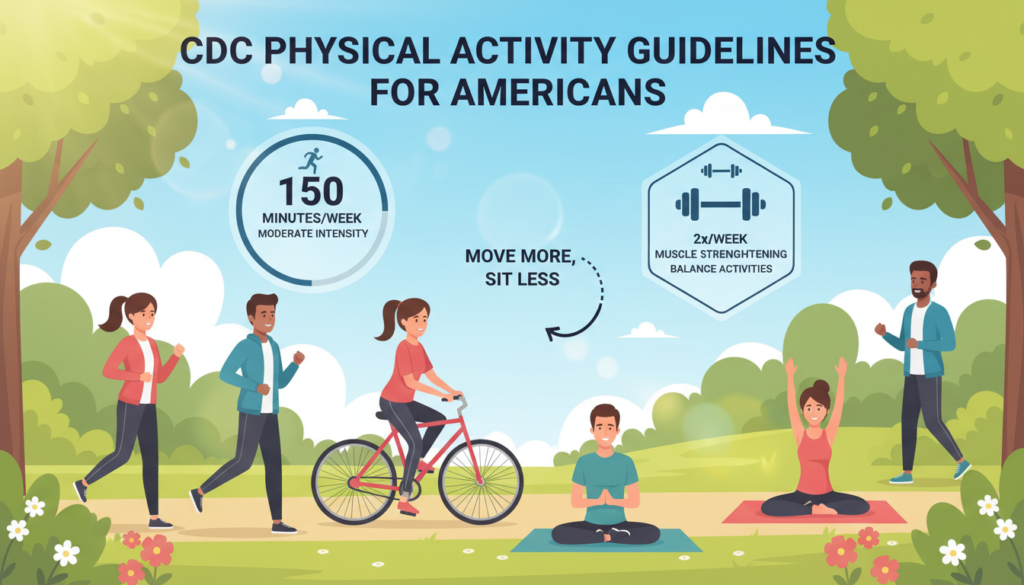
The CDC offers simple, evidence-based activity targets most adults can use as a starting point. These activity guidelines are flexible tools meant to fit different schedules and abilities.
Moderate vs. vigorous intensity and how to tell the difference
Moderate feels like brisk walking or easy cycling — you can talk but not sing. Vigorous means you can only say a few words before pausing for breath, like jogging or fast cycling.
Weekly targets and why consistency beats speed
The guideline range of 150–300 minutes per week is backed by studies. One large study of over 116,000 adults found this range linked to a 19% lower risk of dying from any cause.
Short sessions add up: three 10-minute brisk walks count just as well as one long session if you repeat them each week.
Balanced training: strength, muscle-building, and flexibility
- Aerobic work for heart and stamina.
- Strength training to support muscles and daily function.
- Flexibility and mobility to reduce stiffness and prevent injury.
Using planners, logs, and progress tests
Use a simple planner or log to track minutes, a timed walk or push-up count to measure progress, and mobility checks for range of motion. These tools keep focus on steady improvement, not perfection.
“Build a repeatable routine you enjoy — consistency wins over intensity every time.”
Getting Started With a Fitness Routine You Can Actually Stick With
A simple routine that fits your day beats a perfect plan you never begin. Get started by choosing one small, clear action you can repeat this week.
Start small and build time gradually when you’re busy or new to exercise
Begin with as little as 5 minutes a day if that fits your life. Add a few minutes each week until 10–15 minutes feels normal.
Setting realistic fitness goals that match your level, schedule, and body
Set goals that match your current level and weekly time. Aim for consistency: three short sessions per week often beats one long, exhausting workout.
Choosing activities you enjoy: walking, biking, yoga, and indoor options
Pick activities you like so you keep doing them. Walking and biking are low-barrier choices; yoga and home circuits work well indoors.
When to talk to your doctor before training and what symptoms to take seriously
If you have ongoing conditions or new symptoms, check with your doctor before training. Call your clinician for chest pain, sudden dizziness, or extreme shortness of breath.
“Older adults and people with chronic pain can often stay active with smart modifications and slower progressions.”
Practical tips: lay out shoes the night before, pick a daily cue time, and treat short movement like a small appointment with yourself. These small steps help you get started and keep staying active.
Building Your Weekly Exercise Program: Cardio, Strength Training, and Flexibility
A practical weekly program mixes cardio, strength, and flexibility so progress is steady and sustainable. Balance helps you improve heart endurance, build muscles, and keep joints moving without overdoing any single element.
Walking for fitness: start small, progress safely
Begin with short, comfortable walks that fit your day. Add 5–10 minutes each week until 30 minutes is routine.
When consistency feels easy, add gentle intensity: brief faster intervals or small hills. Increase time first, then intensity.
Heart-pumping cardio that burns calories
Jogging, biking, and speed walking raise heart rate and often burn the most calories per session. Pick one you enjoy so you can repeat it regularly.
Strength training for muscles, metabolism, and support
Lift weights or use body-weight moves twice weekly to build muscles that protect joints and support body weight. Muscle tissue burns more calories at rest, which helps metabolism beyond the workout itself.
Flexibility and mobility to reduce pain and aid movement
Short mobility sessions reduce stiffness and help everyday tasks like standing from a chair or reaching overhead. Done consistently, these exercises may lower pain for some people.
Sample week structure
- 3 cardio days (walk, bike, or jog)
- 2 strength days (full-body resistance)
- 1–2 mobility sessions (10–20 minutes)
- At least 1 full rest/recovery day
Progress without overtraining
Increase only one variable at a time: time, intensity, or frequency. Watch for persistent soreness, poor sleep, or falling performance. If that happens, scale back and add an easier week.
Choose a program you can keep most weeks — consistency beats intensity that burns you out.
Easy Ways to Get Active Every Day Without Overhauling Your Life
You don’t need a gym: stack short moves through the day to add meaningful activity. Small changes add up and make movement feel natural instead of extra work.
Sneak movement into routines
Schedule walk breaks during work or between chores. A 5–10 minute walk resets energy and reduces long sitting spells.
Park farther, take stairs when practical, or do a set of squats while brushing teeth. These quick bursts cut sedentary stretches and raise daily activity.
Make movement a family habit
Turn play into purpose: backyard tag, pickup basketball, short bike rides, or active games combine fun with physical activity.
Chasing kids or joining their games is a simple way for adults and kids to build routines together and enjoy staying active.
- Busy-people tips: set a phone reminder, tie a walk to coffee time, and favor consistency over intensity.
- Make it easier: keep shoes by the door, pick safe well-lit routes, and keep indoor backups for bad weather.
Most people have more movement time than they think — count small chances across the day and watch progress grow.
Staying Motivated: Tips to Maintain Regular Exercise Long Term
Keeping a steady plan takes more than willpower; it needs systems that make movement automatic. Treat motivation as a setup problem: place shoes by the door, block times on your calendar, and make a clear backup for missed sessions. These small cues make a routine easier to follow.

Plan with flexibility. Mark 2–3 realistic workout slots each week and add short backups (10 minutes) so one missed session won’t derail progress. This preserves momentum and limits all-or-nothing thinking.
Use social support: find a buddy at work, a neighbor, or an online group. Accountability helps people stick with goals and makes activity more enjoyable.
- Mindset tips: focus on showing up—put shoes on, step outside, notice how you feel after.
- Track wins: log completed workouts, faster walk paces, or extra reps to build a proof trail.
- Rewards: some insurers offer incentives (gift cards or HSA contributions) for meeting activity targets.
“Small, repeatable habits beat rare bursts of effort.”
Conclusion
Daily, doable actions add up to big improvements over months and years.
This guide shows that lasting gains come from steady, real-life plans—not extreme routines that fade. Small steps build better heart strength, more energy, easier movement, clearer sleep, and a brighter mood.
Use the Centers for Disease Control recommendations as a baseline. Aim for a balanced mix of cardio, strength, and flexibility. Increase time or intensity slowly so consistency wins.
Pick one simple next step today: a short walk, a beginner strength set, or log a week of movement. Setbacks happen; get back to the routine quickly. Small sessions still count.
Revisit goals monthly, adjust your program as you progress, and notice the benefits in daily life.