

Fitness means feeling capable in your body, waking with steady energy, and moving without constant aches. This guide keeps things simple so you can make progress without extreme plans or perfect routines.
You’ll find clear, expert-backed information on goal-setting, weekly activity targets, and basic strength moves that protect joints and build muscle. The advice fits busy U.S. schedules and different comfort levels, whether you work out at home, in a gym, or in a class.
Start small: one short step today — even 10 minutes — can build momentum when done each day. This content is educational and not medical advice; personal health situations vary, so consult a professional when needed.
Key Takeaways
- Real fitness is daily ease of movement and steady energy.
- Small, consistent exercise beats perfect routines.
- Focus areas: weekly activity, strength basics, right workout setting.
- One short step today can build lasting habit.
- Content offers expert information but is not medical advice.
What Fitness Really Means Today and Why It Matters for Your Health
Modern fitness focuses on daily function: how easily your body handles work, play, and rest. It’s a practical measure of comfort, energy, and lasting resilience—not just a look or a scale number.
Key health benefits to expect
Regular movement brings clear health benefits). You can expect more daytime energy, better strength for lifting and carrying, improved endurance for stairs and walks, and real stress relief.
- Energy: steadier days and less fatigue.
- Strength: safer daily tasks and fewer aches.
- Endurance: longer walks, easier chores, better stamina.
- Stress relief: mood lifts and better sleep.
How movement supports long-term health
Exercise keeps your heart and lungs strong, preserves joint function, and boosts mood. These are lasting health benefits that matter beyond appearance.
Weight may change slowly, but moving regularly improves markers like blood pressure and balance. Mind-body formats like yoga and pilates pair breathing with control and recovery, offering a low-intensity way to start.
Benefits apply across sex and life stages. The right routine is the one that fits your life and keeps you coming back — and that’s what will truly matter.
Set Your Fitness Goals and Match Them to Your Fitness Level
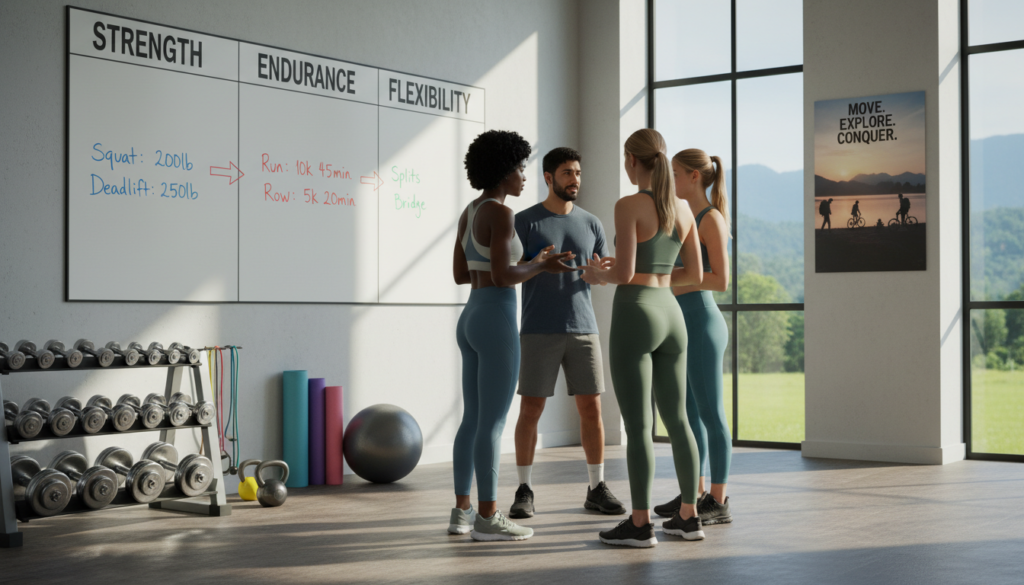
A focused goal turns scattered effort into steady improvement. Pick one primary aim: strength, endurance, mobility, or weight management. That choice guides what workouts look like each week and which small wins to track.
Quick ways to gauge your level
Use simple checks: try the talk test while walking, note how fast you recover after a 20-minute walk, and see if basic bodyweight moves feel stable. These tell you real-world fitness levels without gadgets.
Track progress and avoid perfection
Track easy markers: finished workouts, one more rep, heavier weight, longer walk, or freer range of motion. Create a “minimum plan” for busy weeks and an “ideal plan” when you have more time.
Build exercise into your day and family life
- Two 10-minute walks (morning + evening) or a short strength circuit during lunch.
- Quick yoga flow before bed or pilates sessions for posture and control.
- Include kids: active play, family walks, or partner circuits so you skip extra childcare time.
Next step: choose one goal and block two small time windows this week to start. One simple step now beats perfect plans later.
Weekly Exercise Guidelines for Adults in the United States
Treat the week as a flexible menu of movement — pick a mix that fits work, family, and energy levels. These targets are a guide, not a pass/fail test.
Aerobic targets and a flexible approach
Aim for at least 150 minutes per week of moderate aerobic activity or 75 minutes of vigorous activity, or a mix that equals those totals. For extra health benefits or weight goals, aim for about 300 minutes of moderate activity.
Spread for recovery and consistency
Divide sessions across most days — for example, 30 minutes five days a week, or shorter bouts like three 10-minute walks daily. Spreading helps recovery and keeps momentum.
Moderate vs. vigorous in real life
Use the talk test: moderate lets you speak in short sentences (brisk walking, biking), while vigorous makes talking hard (running, fast laps). These cues help classify effort so you can track endurance and progress.
Sample week and strength basics
- Mon: 30-min brisk walk (moderate)
- Tue: Strength training (major muscle groups, 2x/week)
- Wed: 20-min run or interval (vigorous)
- Thu: 30-min bike or yoga for recovery
- Fri: Strength training (full-body)
For weight loss or sport goals, increase volume gradually. Yoga can support recovery and movement quality on lighter days. Targets apply to adults of all sex and backgrounds; individual needs vary by baseline fitness and medical history.
Strength Training Best Practices for All Major Muscle Groups
A simple, full-body approach to strength training gives real carryover to daily life: lifting groceries, climbing stairs, and protecting joints. It builds posture, balance, and quiet confidence in your body.

How often to train: Aim to train all major muscle groups at least twice per week. Even one well-executed set can help, but consistency matters most for long-term gains.
Sets, reps, and effort
Pick a resistance that makes the last few reps challenging. For general strength, target about 12–15 reps so the muscle tires near the end.
Keep sets controlled. Stop when form drops and rest enough to repeat safely.
Equipment and pairing
Smart options include gym machines, free weights, resistance bands, body weight, or heavy bags. Creative choices—water paddles or climbing—work too.
Pair strength work with yoga or pilates for mobility and control. This helps people who sit a lot feel less tight and move better.
“Balanced training across push, pull, hinge, squat, carry, and core reduces injury risk.”
Minimum effective plan: one full-body workout in a busy week keeps the habit alive and protects progress.
Choose the Right Workout Type: Gym, Home, or Class-Based Training
Pick a workout type that fits your schedule, comfort level, and goals so you actually keep showing up. The right choice links your goals—endurance, strength, mobility, or stress relief—with the support you need.
Low-impact water options for joint pain and arthritis
Gentle Aqua eases movement in water and suits arthritis or joint pain recovery.
Cardio Splash mixes water aerobics with low-impact drills to tone and improve mobility.
Cardio-forward classes for endurance and calories
Try Les Mills RPM for low-impact cycling that builds endurance and burns calories. Zumba and cardio dance add interval-style fun for steady calorie burn.
Strength-plus-cardio blends and combat conditioning
Power Pulse and Cardio Kick pair full-body strength with cardio bursts for fast results.
Round 12 Boxing and Les Mills BodyCombat build functional strength and stamina; Karate adds balance and skill work.
Mind-body options: yoga and pilates
Yoga calms the mind while improving mobility and core control. Pilates targets core strength and posture to support the whole body and help runners avoid injury.
Picking the right intensity
Modify speed, range, load, or rest so beginners and advanced participants train together safely. Match the type to your goals and the way you like to move.
Stay Consistent Without Burning Out: Recovery, Stress, and Real-Life Tips
Make progress by protecting a few anchors in your week and filling the rest with short movement breaks. Small pockets of activity across the day add up and protect long-term health. Even short sessions help the body adapt.
Building a routine that fits family and work
Plan two fixed sessions each week as your anchors. Then use flexible “movement snacks”—five- to ten-minute walks or bodyweight circuits—when time is tight.
Protect your time by prepping clothes the night before and keeping a simple default routine you can do anywhere.
Handling soreness, back issues, and common problems
Normal soreness fades in a few days. Watch for sharp or lasting pain, numbness, or swelling—those are warning signs to stop and seek care. Avoid ramping volume too fast and change patterns that repeat the same strain daily.
For back discomfort or joint concerns like arthritis, prioritize form, gradual progression, and supportive options such as yoga, pilates, or water-based exercise.
Recovery, stress, and when to check first
Use easier days, quality sleep, hydration, light walking, and mobility work to help recovery. Treat exercise as a stress reliever, not a punishment.
“Check with a health care professional before starting a new program if you have chronic conditions, recent long breaks, or worry about pain.”
Next step: pick one small step you can repeat this week—one anchor session or a daily five-minute movement snack—and make it automatic.
Conclusion
Start small: set one clear goal, then schedule two anchor sessions this week and a lighter day for walking or stretching.
This simple way blends cardio, strength, and recovery like yoga or pilates to build core control, muscle tone, and steady energy. Short workouts and a single class can add group motivation without stealing family time.
Notice benefits in your body first—easier daily movement and more energy often appear before weight changes. If weight is a goal, steady activity plus consistency helps more than extremes.
Choose one small step now—a class signup, a short walk, or a beginner circuit—and repeat it until routine forms. This content is for informational purposes only and not medical advice. Seek professional guidance for pain, ongoing problems, or health concerns.